A flyer handed to a young girl on her way home from school can easily disappear into a drawer and eventually be forgotten. For Bianca Sârbu, one of those flyers quietly changed the direction of her life. She entered a basketball gym without knowing what the sport would eventually mean to her and discovered a place she kept wanting to return to. Fifteen years later, the 20-year-old Romanian has represented her country, competed against some of the strongest players of her generation, crossed an ocean to continue her career in the United States and built friendships far beyond the borders of the country where everything began. Basketball became the place where her talent could grow, although its greatest meaning can be found in everything the game has allowed Bianca to discover about herself and the people around her. “Most of my life has been basketball, and I hope it will continue to be that way. Basketball has given me so many opportunities and allowed me to meet so many people. One of my favorite things is meeting new people, learning about different cultures and making friends all over the world.”
That openness towards the world is an important part of who Bianca has become. Her ambition is unmistakable, yet there is always room in her story for other people. Teammates, coaches, opponents and friendships have all contributed something to a journey that began without a carefully constructed plan.
The flyer that opened an entirely new world
There was no family meeting about which sport Bianca should choose and no childhood masterplan that already pointed towards an international basketball career. She simply encountered someone handing out flyers on her way home from school. Like many children, she was willing to try something new. The difference was what happened once she stepped onto the court. “It was not a decision I really thought through. I was young and walking home from school when there was a lady handing out flyers. She asked whether I wanted to come and play basketball. As a child, you tried different sports, so I went too. Once I entered the basketball gym, something clicked inside me. I immediately wanted my mother to take me back to the court. From that moment, I kept going to practice.”
Basketball gradually occupied more and more space in her life. Bianca also competed in track and field for approximately six years while continuing to play basketball, which meant that eventually a choice had to be made. By then, the answer had already been formed through countless practices, summers and hours spent working on her game. “I think I may have had only one summer off when I was younger. Since then, I cannot really imagine a schedule or a period in my life in which I am not playing basketball or working out for basketball. It became such a huge part of my life. I tried other sports and did track for about six years while playing basketball, but eventually I had to choose. I could not leave basketball behind. It is simply a part of me.”
Her first memories of the sport contain something that still characterizes Bianca today. She did not immediately excel at everything she was asked to do. Instead of pushing her away, that difficulty attracted her. “I remember that it felt different. I suddenly had to run around after a ball and I was a little confused about what we were doing, although I liked it at the same time. I was not really good at basketball when I was young, so I wanted to become really good precisely because I was not good at it yet. That is also part of my personality. If somebody tells me that I cannot do something, I will definitely try to do it and do it as well as I possibly can. I want to show that I can. It was funny, thrilling and full of adrenaline. I remember thinking that this was something for me. I just loved the pressure.”
Two sisters, one sport and different qualities
Basketball was also shared with someone particularly close to Bianca. Her twin sister Larisa played the sport as well, although she stopped this year after her own journey developed differently. Bianca speaks about that decision without trying to force her own love for basketball onto somebody else. Their similarities as sisters never meant they became identical basketball players. Bianca developed into a versatile player who feels comfortable creating, handling the ball and adapting to different responsibilities. That versatility partly came from the way she was taught as a young player. Nobody could know exactly what position her body, skills and development would eventually lead her towards, so her game was deliberately kept broad. “I am more of a versatile player. Growing up, I was trained to be able to do different things and play from the one through the five. When you are young, you do not really know what position you are eventually going to play, so my coach trained me to be capable of playing everywhere. Larissa is more of a spot-up shooter. I like creating things for myself, while it is easier for her when somebody creates an opportunity for her.”

Learning what basketball demands when the level rises
One important stage in Bianca's development came at Centrul de Excelență, a program bringing together talented young players from across Romania who were considered potential future national team players. Many of the girls she shared the court with there would indeed become teammates in Romanian colors. “It was basically a group of kids from all over the country who were being prepared for the future. They were players the federation believed could eventually make the national team. Most of the teammates I had there were also players I later played with for the national team.”
The experience introduced her to a different interpretation of the game. Basketball was still something she loved, although progressing towards elite competition required greater concentration, tactical understanding and discipline. “It showed me how different the playing style can become at higher levels. When you start basketball at a club, everything begins with smaller drills and there is a lot of playing. Once you become better and experience the game at a higher intensity, you realize that there is much more involved. You have to think about plays, understand situations and stay much more focused. At that level, it is not only about having fun anymore.”
Success also became familiar. Bianca spent around five years with Dan Dacian in Bucharest and remembers a team that felt like a family. Together they won six championships, sometimes succeeding while competing above their own age category. Playing for an Under-16 team did not prevent them from winning at Under-18 level. Bianca was accustomed to being an important player in a successful group of girls her own age.
The youngest player in a room full of experience
Playing for teams such as ACS Bucharest and Rapid Bucharest placed Bianca among experienced senior players. The comfortable position she had known in youth basketball disappeared. Practices became harder, days became fuller and basketball suddenly demanded that a young player find her place among women who had already spent years competing professionally. “That was my first real experience with a professional team. They were senior players and older than me, and I was scared. It was a shock because I had been used to being at the top and being one of the main players on a team with girls my own age. Suddenly everything was extremely hard and intense. We had two practices a day while I also had to go to school. I was the youngest player on the team, and all those women were so passionate and experienced. They intimidated me, I am not going to lie, but they also helped me improve tremendously.”
One of those experienced players at Rapid left a particularly deep impression. She was in her early forties and had built a basketball life whose longevity fascinated Bianca. Experience became something that could be shared rather than something a younger player had to fear. “There was a woman on the team at Rapid who was 42 at the time. She was basically my mother on the court. She had so much experience and became one of the players I really looked up to because she had been playing basketball for such a long time and was one of the important players in Romania. She would always tell me what I could do better. I was extremely nervous and afraid of making mistakes, and she taught me that practice was exactly the place where I had to make those mistakes. Once you get into a game, you should not still be thinking about them. That experience was a really important start for me and helped me improve a lot.”
There is something meaningful in that memory. Bianca's development has never consisted solely of points, minutes and victories. Several of the decisive moments in her career have come when somebody saw something in her, gave her knowledge or created enough safety for her to discover more of herself. The coach who gave Bianca permission to trust her own game That became especially evident during her season with Sportul Studențesc București, where Serbian coach Veljko Perović played an important role in her development. We from Support by Report saw Perović playing basketball in The Netherlands in 2003/2004 at Rotterdam Basketbal. Bianca arrived as a player whose fundamental game had already been shaped, yet there was another part waiting to grow: the freedom to use everything she possessed without constantly wondering how it would be judged. The transfer itself brought uncertainty. Sportul Studențesc had previously been one of the major rivals of Bianca's former team, which made the warmth she encountered there particularly valuable. She found a group willing to welcome her and a coach prepared to trust her. “I adapted really well to the team. I did not expect everybody to be so welcoming because they had been one of our biggest rivals when we were younger, so transferring there felt strange at first. Everybody welcomed me in such a kind way. The staff supported us and helped us, and I felt comfortable within the team.”
Perović offered Bianca something she particularly needed at that point in her career: playing time accompanied by genuine responsibility. “I was already largely formed as a player when I started playing for him, so one of the biggest things he gave me was confidence. That was also why I wanted to transfer in the first place. I needed playing time, and he gave me a lot of trust. He kept pushing me to discover where my limits were. He trusted me to make plays that I did not even think I could make, and that helped me understand that I could become much better than I had been showing.”
He also recognized how Bianca's athleticism could become an even greater weapon. More aggression, stronger drives and greater belief in her physique could expand her game. The technical lesson mattered, although the mental freedom behind it became even more important. “He always told me that I was very athletic and that I could use my physique better. He wanted me to create more, drive more and become more aggressive as a player. I had never really looked at myself that way. Sometimes I would hold myself back because I cared too much about what coaches or other people might say about me. I think he helped me move away from that negative side. He helped me realize that what everybody else says does not have to determine how I play. I have to play in a way that feels right and play for myself as well.”
Sportul Studențesc also regularly faced powerful opposition. Even defeats could therefore contain progress. Bianca remembers games in which fear gradually disappeared and her willingness to compete took over. “We played against really strong teams. Even when we lost, I felt that I gave everything I had in those games. I have highlights from those matches where I can see that I showed no fear. I would tell myself that the player in front of me was not simply going to defeat me, so I had to go out there and give everything. That helped me improve and prepared me for what I wanted to do in the future. Traveling and playing abroad had always been one of the major goals in my career.”
Passion needs care as much as it needs fire
Watching Bianca play makes her energy difficult to miss. She communicates, brings emotion to the floor and puts visible passion into the game. Those qualities can lift a team, although Bianca has also learned that the same relentless desire to improve needs balance. “I am really vocal, I have a lot of energy and I put a lot of passion into the game. Sometimes, when I lose myself, I have moments where it becomes difficult to find myself again. My first thought used to be that I needed to spend even more time in the gym and keep going again and again. That is also how burnout can happen.”
Growing older has given her a different understanding of those moments. A poor game does not suddenly erase the player she has spent years becoming. More repetitions cannot solve every struggle when the real battle is taking place internally. “I am able to think about those situations much better now and manage them differently because I know that simply doing more is not always the solution. It does not mean that I am a bad player. Sometimes it is my mind. I think the mental side is one of the most important parts of basketball. You have to find yourself, make sure you do not lose yourself and learn not to remain focused on your mistakes.”
From thirty seconds to refusing to disappear
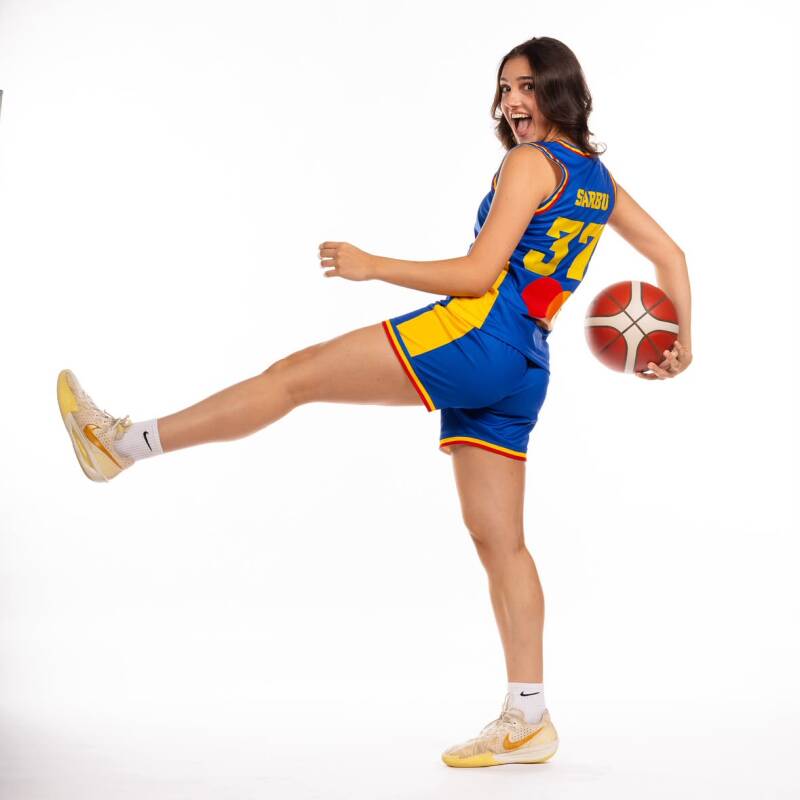
Her relationship with the Romanian national team contains perhaps the clearest example of that development. Bianca first appeared at a European youth championship around four years ago. Wearing the colors of her country was exciting, although her first tournament also confronted her with disappointment at an age when confidence can still be particularly fragile. “It was incredibly exciting and I was so nervous. I was sweating so much, especially during the first games. My coach probably noticed how nervous I was, so I did not play very much. I remember being extremely sad during that first European Championship because I wanted to play and did not know what I could do to change the situation.”
One particular moment remained with her. Bianca entered the game for approximately the final thirty seconds. Instead of allowing that experience to define what she was worth, she eventually turned the pain into a decision. “At one point, I was substituted into a game for the final thirty seconds, and that was all the playing time I received in that particular game. I felt as though everybody was looking at me and thinking that they had finally put me on the court. After that championship, something changed inside me. I told myself that I was not going to remain a bench player when I was giving everything in practice and knew that I deserved the opportunity for somebody to trust me.”
The following season brought progress, while subsequent national-team summers brought more playing time. Her response to disappointment had become part of her development. “I had a really good season after that, and during the following years with the national teams I played much more. That first championship was a moment when something clicked. I realized that basketball had to remain part of my life because I loved it too much to give it up.”
A teammate who shared the bench with her during that difficult tournament ultimately decided to stop playing. She asked Bianca why she still wanted to continue. The answer was simple in meaning and enormous in consequence. “She asked me why I still wanted to do this. I told her that I did not really know how to explain it other than that I simply loved basketball. I could not allow that experience to make me quit. I do not think one championship or one difficult experience could ever make me give up this game. Nothing is going to stop me while I am still able to play. Maybe my knees will eventually stop me when I am 45, but until then I will be playing somewhere.”
Crossing an ocean and discovering another version of basketball
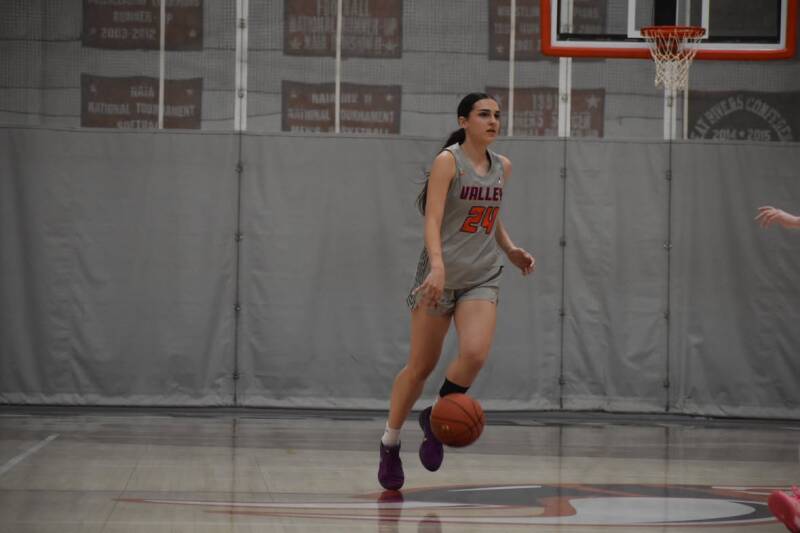
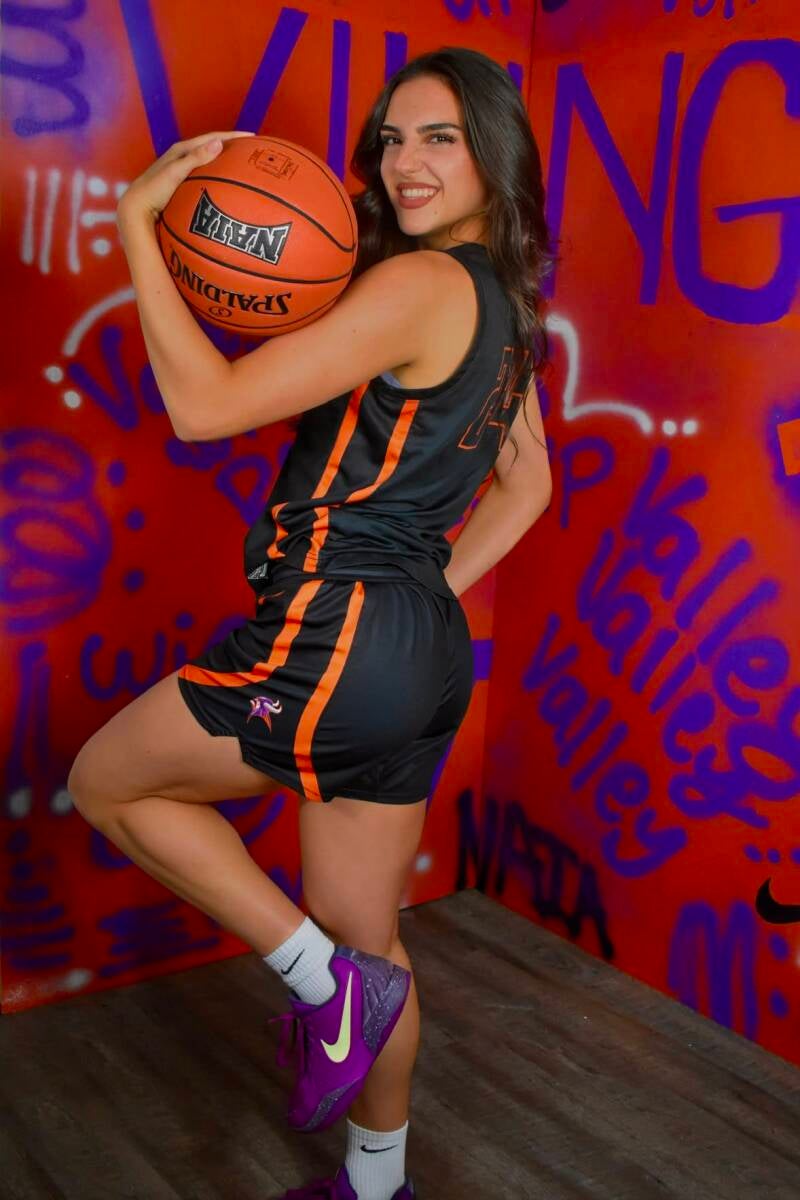
Another major chapter had already begun by then. Bianca moved to the United States to play at Missouri Valley College, leaving Romania and her family behind for nine consecutive months. International basketball itself was familiar through her experiences with the national team, but living thousands of kilometers away from home made this transition fundamentally different. “Moving to the States was not only a basketball change. It changed my everyday life as well because I had moved so far away from home and did not see my family for nine months straight. That was probably the biggest challenge I had faced in my life until then. I am not going to pretend it was easy because it was really hard, although I think I adapted quite well. I faced the challenges that came my way and eventually found my way through them.”
The basketball adjustment brought its own surprises. Bianca had grown up within a European interpretation of the game built heavily around footwork, reads, movement and tactical execution. In the United States, she encountered a more physically direct environment. “The playing style was so different that it shocked me at first. The biggest difference I noticed between European and American basketball was the physicality. In Europe, there is generally a lot of emphasis on footwork, court vision and basketball IQ. The American game I experienced was extremely physical. Players compete as though there is no tomorrow and every game is their last.”
One instruction from an American coach captured the cultural adjustment perfectly for a player accustomed to creating through footwork. “It was the first time a coach had ever told me that I needed to stop dancing and simply go all the way to the basket. I remember thinking that nobody had ever said something like that to me before.”
She can smile about the contrast now. Bianca also sees the value in being forced outside the basketball language she had known for most of her life. “I know that I can do much better than I did during my first season. Adapting was difficult, although everything happens for a reason. I am not angry about the experience. I think playing in the States can help me improve a lot precisely because it asks different things from me.”
A dream that has grown larger
Fifteen years have passed since the sport has taken her from children's practices to Romanian championships, from development programs to senior basketball, from difficult minutes on a national-team bench to representing Romania throughout her youth career, and eventually from Bucharest to Missouri. There have been coaches who trusted her before she completely trusted herself. There have been teammates who shared experience, opponents who forced her to become stronger and moments of disappointment that asked whether her love for basketball could survive when the game hurt. Each time, Bianca found another reason to continue. Her ambition now reaches towards professional basketball. That dream is carried by talent and athleticism, although neither tells her complete story. “I want basketball to remain part of my life. It has already given me so many opportunities, introduced me to so many people and allowed me to experience different cultures. I want to become a professional player, and I know there is still so much ahead of me.”
Wherever the next court may be, Bianca Sârbu will arrive carrying much more than fifteen years of basketball experience. She carries the trust people have placed in her, the lessons she has earned through difficult moments and the love for a game she once chose almost by accident. Most importantly, she carries the ability to pass those things forward. Her journey shows that talent can open doors, courage can help someone walk through them and genuine connection can make every place on the other side feel a little more like home.
Reactie plaatsen
Reacties