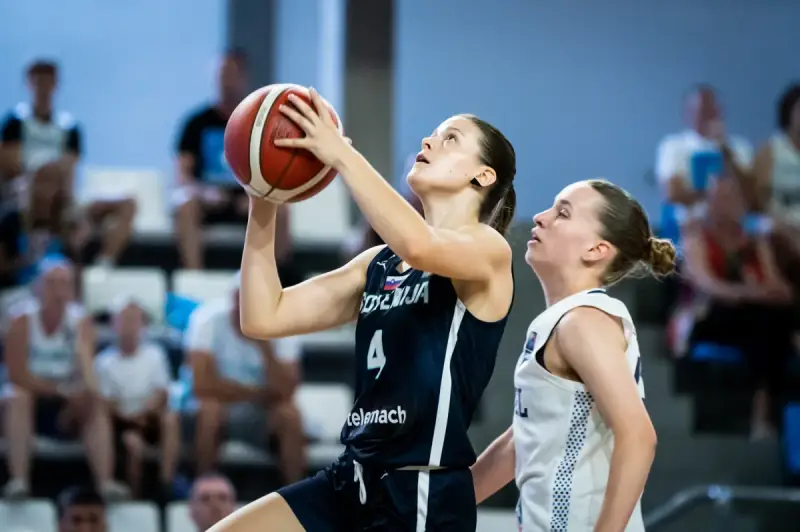
At 18, Brina Sedminek has already stitched together a résumé that stretches well beyond her years: a steady rise from primary-school hoops to ŽKK Grosuplje, a leap to Akson Ilirija in high school, minutes in Slovenia’s top women’s competition and the WABA 2 (Adriatic) League, and caps with Slovenia’s national youth teams under 16 in 2023 and under 18 in the summer of 2025. The arch of her journey, though, began much closer to home: on her street, with stones lined up like makeshift cones. “My mother used to play basketball and probably because of her I started to play in a club,” Brina says. “We used to go train together. She taught me a lot of moves. One day we went on our street and my mother set up these stones where you have to make a dribble and we trained together.” Her dad joined in for fun, her brother, too. “When I was younger, we used to play it all together,” she adds.
From school gym to a real locker room
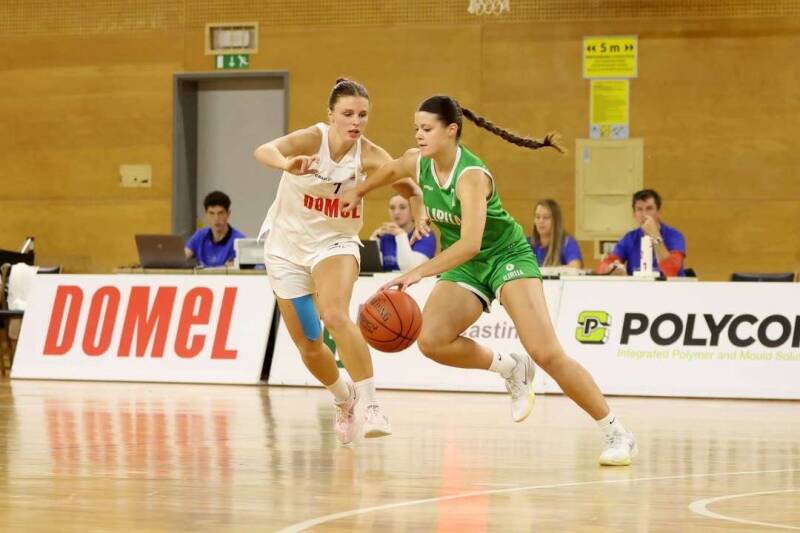
Brina’s first organized sessions happened at school; by third grade she had joined Grosuplje. “From Grosuplje I remember that I started to play with two very good friends. We had a great time because we were all together,” she recalls. Growth can be a lonely companion; friends drift, ambitions harden. For Brina, the next step required both courage and a nudge. “I have to thank actually one of my coaches who invited me to Ilirija; if he hadn’t invited me, then I wouldn’t be there.” Switching clubs in high school meant a new system, new standards, and a new locker room. “I didn’t know anyone except one teammate who went from Grosuplje to Ilirija with me, but I think we got along pretty easily and pretty fast. We became very good friends,” she says. Four years later, that leap looks obvious; in the moment, it wasn’t. She worried she might not fit. Then she met the team, laced up, and played.
Ilirija competes in the WABA 2 division, a second tier whose travel and unfamiliar matchups bring a different kind of education. “At first it wasn’t much different from our national league because there were a lot of Slovenian teams that we already knew. But when you get out of the group stage, you start to play with different teams and it was nice to finally play against someone that you don’t know, in Slovenia all the teams know each other and it gets pretty much old,” she says. New opponents force new solutions; it’s exactly the stimulus a young guard craves.
Last season delivered a high, and a test of patience. Ilirija won the WABA 2 title, but fate benched Sedminek on the night of the crowning game. “I did not play because I was sick,” she says. “I felt really bad that I had to miss this game because I played all season for WABA 2 and then I couldn’t be a part of the team, but that happens.” The medal still hangs; the hunger to earn the next one on the floor burns hotter.
Wearing Slovenia across the chest
The crest changes how the game feels. Brina’s first continental summer came with Slovenia under 16 in 2023; a debut that taught tempo, structure, and humility. “I was very excited and really grateful to get the opportunity. You really learn a lot on the national team, how the system works,” she says. Two years later, under 18 in the summer of 2025 hit differently: “If I have to compare the last Europeans to my first, I would say that the last one was better for me. I learned a lot more from this team I played with this summer, you have to be really flexible with your game to even become a part of this team that the national coach selects.”
That flexibility, defend multiple spots, play on or off the ball, accelerate without losing the read, comes from hours most people never see. “I am very stubborn, and I know exactly what I want,” she admits with a smile. “I really work hard. This summer I was really well prepared and then the coach gave me opportunities, and I think I really made the best out of them. I just played like I know how to.”
Results never tell the whole story, and she knows it. “Although the results of the European Championship didn’t exactly state that fact, I think that I really learned a lot about the game; more experiences that you have, more confident you become and it’s easier to play.”

How Brina plays
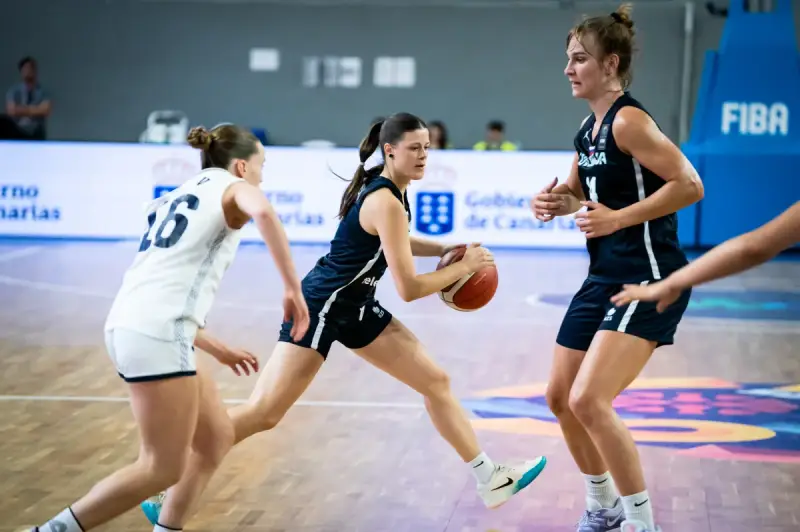
Ask coaches and they will talk about her poise with the ball and the way she keeps the floor organized without slowing it down. Ask Brina and she will steer you back to work. The family-built dribble, the balance trained in childhood gymnastics (“At first I was also training gymnastics and then I had to choose, at the end I chose basketball”), the hours on side hoops and in quiet corners of the gym have accumulated into a guard who makes good decisions at game speed. She doesn’t dress it up with adjectives; she demonstrates it by showing up early, staying up late, and learning to love the next rep.
The season ahead
Ilirija enters this campaign with more questions than continuity. “We have quite a new team, a lot of new players. I think that we will overcome our issues and we will play better every game that we play. So, it will be an interesting season. We are aiming to be the champions of the WABA 2 League for the second time in a row. I also play for under 20 and we are hoping to be champions. And for the Women’s League, we want to go to the final, that is for sure; aim as high as we can.”
That competitive clarity comes with the same steady tone she used to introduce herself, the same steadiness with which she recounts missing the championship game, the same steadiness that turns unfamiliar opponents into solvable problems.
Strip away the schedules and standings and you return to the image of a girl and her mother on a street in Slovenia, stones as cones, repetition as rhythm. The center of gravity hasn’t moved. “My mother; every game that I play she encourages me and also my father; they both give me a lot of opportunities to even train,” Brina says. Support isn’t a halo in her story; it’s a plan for how to live a sporting life. Together, with a shared belief that work will become graceful when it matters.
What comes next?
Project the curve forward and you see possibilities: more minutes, more leadership, another medal earned the hard way, perhaps a senior national team camp down the road. But projection is noise to someone who measures progress in the language of daily habits. “I still have a long way to go,” she says, “but I think that I understand the game better than I did before.”
And that, more than any single performance, is why you watch Brina. Because every game looks a little cleaner than the last one. Because the decisions arrive at a beat faster and the mistakes shrink. Because the player who once dribbled through stones in the street has learned to navigate full-court pressure with the same composure. Slovenia has a knack for producing guards who see the floor like a chessboard and compete like it’s personal. Add one more to the list. She’s already here; steady, hungry, and building a future one possession at a time.
Reactie plaatsen
Reacties